Gratitude in the Workplace: Why It Pays — 7:47 Club

Gratitude at work

Gratitude in the Workplace: Why It Pays

Gratitude isn't soft, and it isn't a once-a-year Thanksgiving activity. It's a strategy, and the research shows it pays off.

By Chris Schembra · Adapted from the guide Incorporating Gratitude in Corporate Culture

Culture shapes the character of a company, and character drives fulfillment, mission and results. At 7:47 we help shape culture in legal, medical, financial and tech companies with one key ingredient: gratitude.

Let's get rid of the biggest myth first. Gratitude doesn't make you, your colleagues or your company weak. Research shows it brings real economic benefits: fulfillment, joy and a measurable return.

Gratitude inside your team

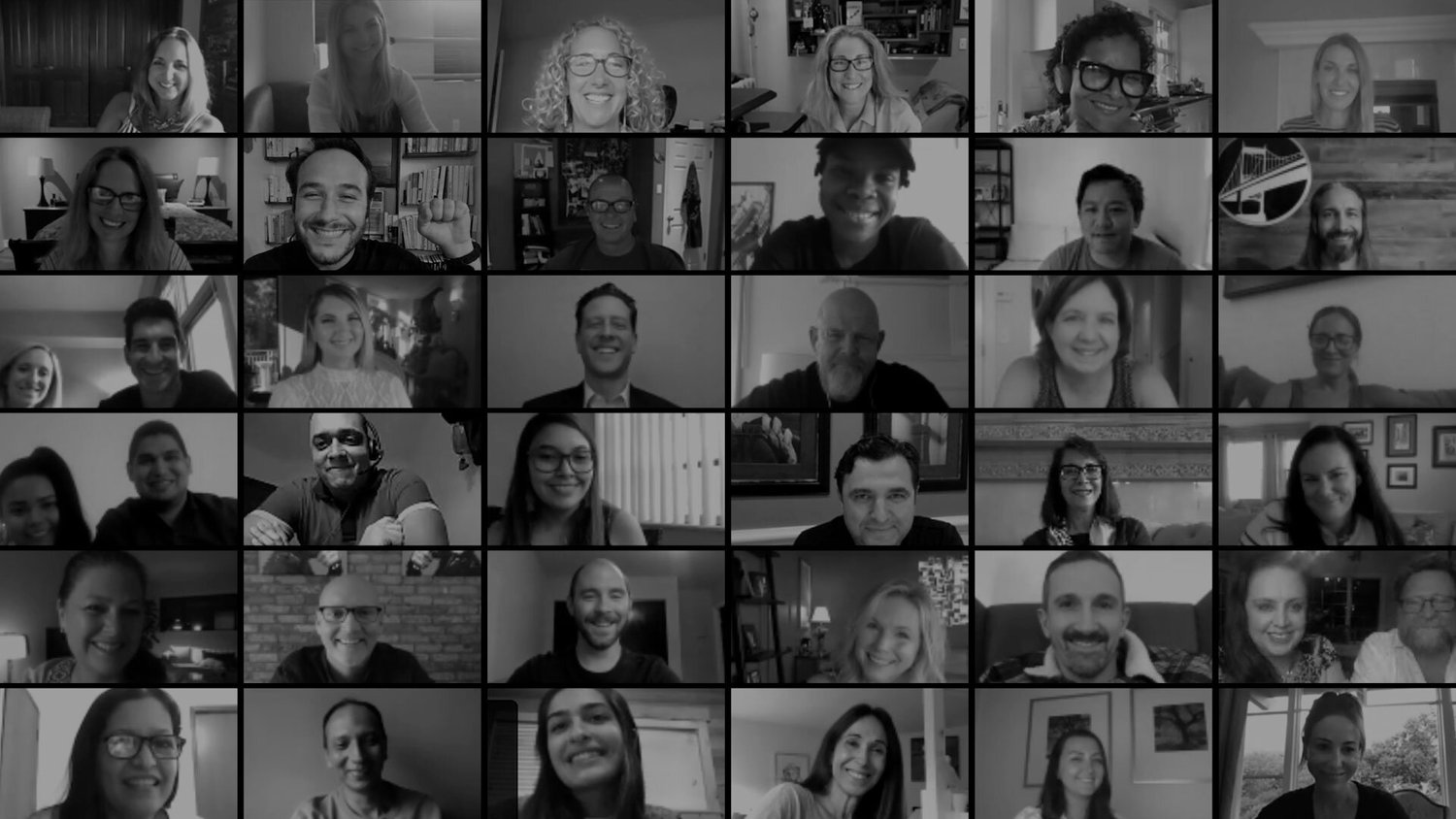
When we run a Virtual Gratitude Experience™, it's obvious right away that many teams are lonely, disconnected and stressed. In 2020 alone we served more than 7,000 people. Going in, the top three emotions they reported were tired, anxious and overwhelmed. Coming out, they were grateful, connected and happy. Average emotion scores rose from 2.79 to 4.52 out of 5.

$2.30

productivity return for every $1 spent on emotional well-being

PwC

7×

more likely to fully engage at work when you have a best friend there

Gallup

78%

of employees whose company encourages creativity are committed to their employer

ReportLinker

When gratitude is expressed on purpose, it builds empathy and understanding and helps people work together, and that shows up in results.

Gratitude with your clients

This is the road less traveled. Companies are grateful for their clients, but they rarely say so on purpose. A satisfied client isn't enough anymore. The goal is an engaged one. Gallup found only 22% of B2B customers are engaged, and fully engaged customers bring in more than 20% more revenue on average. Harvard Business Review found fully connected customers are 52% more valuable than customers who are just highly satisfied.

The business case

The Case for Gratitude at Work

Your people are lonely. They don't feel seen. And plenty of them are already looking for the exit.

More than half of U.S. workers are lonely (Cigna Group, 2025 (opens in a new tab)). Only about 3 in 10 strongly agree they were recognized for good work in the past week (Gallup (opens in a new tab)). Fixing that doesn't take a new platform or a bigger budget. It takes two words, said on purpose, out loud, in front of other people: thank you.

This isn't a feel-good argument. It's a business argument. Here it is.

The problem: lonely, unseen and halfway out the door

Loneliness is now a workplace problem

Lonely workers are more likely to look for new jobs, miss work and be distracted (Cigna Group, 2025 (opens in a new tab)). Loneliness isn't a personal problem that stays at home. It walks into every meeting.

The recognition gap is real

Once a year at review time isn't recognition. It's paperwork.

And the bill comes due in turnover

$16.1 million a year

A 10,000-person organization can save up to $16.1 million a year in turnover by building a culture of recognition.

Source: Gallup/Workhuman, 2022 (opens in a new tab)

Every unthanked employee is a resignation letter in draft.

1. Retention and engagement

53%

say they'd stay longer if their boss showed more appreciation

Source: Glassdoor, 2013 (opens in a new tab)

Thanks keeps people. Full stop.

One warning. It has to be real. More than half of employees whose recognition feels inauthentic (53%) or inequitable (52%) are actively looking or watching for a new job (Gallup/Workhuman, 2022 (opens in a new tab)). A canned "great job, team" can do more harm than silence.

2. Leadership

81%

work harder when their boss shows appreciation

Source: Glassdoor, 2013 (opens in a new tab)

Gratitude isn't soft leadership. It's leverage.

Your words carry more weight than you think. Use them.

3. Peer-to-peer gratitude

25% → 55%

A short written thank-you more than doubled the odds that someone would help again.

Source: Grant & Gino, 2010 (opens in a new tab)

Gratitude doesn't only flow down. It spreads sideways, and it multiplies.

The appetite is there. 77% of employees expect to be thanked for helping a boss or coworker with a major task (Paychex (opens in a new tab)). Yet only 10% thank a colleague every day (Templeton, 2012, via Fast Company (opens in a new tab)), and peers are the source of the most memorable recognition for just 9% (Gallup (opens in a new tab)). That's the biggest untapped resource in your building.

4. Human connection

54%

say a simple "thank you" would ease the pressure they feel at work

Source: Workhuman, 2021 (opens in a new tab)

Connection is the antidote to loneliness. Gratitude is the fastest way to build it.

That's why we gather. A thank-you spoken in a room, where others can hear it, does what a recognition widget can't.

5. Customer marketing and loyalty

Sales growth and share of wallet

driven by customer gratitude

Source: Palmatier, Jarvis, Bechkoff & Kardes, Journal of Marketing, 2009 (opens in a new tab)

This is where most companies leave money on the table.

In 2009, the Journal of Marketing published a landmark study on customer gratitude. Robert Palmatier and his co-authors found that customer gratitude is the engine behind relationship marketing. When a company invests in a relationship, customers feel grateful. That gratitude drives purchase intentions, sales growth and share of wallet. It works through a basic human instinct, reciprocity, and its effect goes beyond what trust and commitment explain (Palmatier, Jarvis, Bechkoff & Kardes, Journal of Marketing, 2009 (opens in a new tab)).

The best part? A short-term moment of gratitude produced long-lasting performance benefits. Grateful customers paid it back, for example by buying additional products "as payback" (Palmatier et al., 2009 (opens in a new tab)).

It works on the sales side too. Salesperson gratitude is linked to customer commitment through extra effort and more open information sharing (Journal of Personal Selling & Sales Management, 2017 (opens in a new tab)). And the loop closes back inside: 10% of employees say their most memorable recognition came from a customer (Gallup (opens in a new tab)).

A discount says "buy more." A dinner says "we see you." Only one of them creates gratitude.

6. Innovation

Feeling valued is the mechanism

People who feel valued speak up, try things and own the outcome.

Source: Grant & Gino, 2010 (opens in a new tab)

New ideas need people who go past the job description. Gratitude is how you get them there.

Nobody pitches a bold idea to a room where they feel invisible.

7. Revenue and ROI

Up to $16.1M a year

in turnover savings for a 10,000-person organization

Source: Gallup/Workhuman, 2022 (opens in a new tab)

Here's the math your CFO will want.

Few line items cost this little and return this much.

The cost of doing nothing

Silence isn't neutral. It's a decision, and it has a price.

Do nothing, and you keep paying: in recruiting fees, in lost know-how, in clients who drift to whoever makes them feel more valued. The question isn't whether you can afford to invest in gratitude. It's how long you can afford not to.

Why gratitude is so underused

If it works this well, why doesn't everyone do it? Three reasons.

This isn't a values problem. Your people are grateful. It's a habit problem. And habits can be built.

Let's put gratitude to work

At 7:47, gratitude isn't a poster on the wall. It's a practice we build with you, from the boardroom to the client dinner table.

  • Keynotes

    Kick off your conference, offsite or sales meeting with a talk on gratitude and human connection that gets people talking to each other, not just listening.

  • Executive Sparring and coaching

    One-on-one and leadership-team work that turns executives into Chief Host Officers: leaders who make people feel seen, every week, not just at review time.

  • Team experiences

    Virtual and in-person Gratitude Experiences™ that turn lonely, disconnected teams into connected ones, using the Gratitude Question to get there.

  • Customer gratitude dinners and customer advisory boards

    Palmatier's research, brought to life around a table. Gather your best clients, thank them on purpose and turn satisfied customers into engaged, loyal partners.

Your people are waiting to be thanked. So are your customers. Let's set the table.

Let's Talk

The future of gratitude is gathering

Many companies treat gratitude as something you hand out through a recognition program. That's a start, like a gratitude journal is a start. But it's personal, and it's only the first step. The real power is observational gratitude: being in a room, in person or on screen, where gratitude is being shared. Hearing a colleague thank someone changes the mood, and it can change how people see the team's mission.

So the leader's job changes too. Be the Chief Host Officer: the one who sets the table and brings people together. And be the Chief Question Asker: the one who asks the question that lets everyone be heard. Ours is simple:

"If you could give credit or thanks to one person in your life that you don't give enough credit or thanks to, who would that be?"

Hilton, one of the world's most celebrated workplaces, recently published "The Hospitality Mindset: A New Blueprint for Culture and Performance for Any Industry." It found 94% of workers say the office still matters, mostly as a hub for relationships and connection. Hospitality, in other words, isn't just for hotels. It's how leaders make people feel valued.

A quick gratitude audit

Score each question 0 to 10, or answer yes or no, on your own or with your leadership team:

  • How curious is your team?
  • How often is humility displayed, especially from key leaders?
  • How coachable is your team?
  • How often do you notice anonymous acts of kindness?
  • How well do people listen?
  • Is there fear around admitting mistakes?
  • Are people thanked who have nothing of substance to offer in return?
  • Are cross-functional teams connecting regularly outside of specific tasks?

Ways to start this week

  • Recognize someone's accomplishment or good deed in your next meeting.
  • Create margin in your day so conversations about tasks can grow into real connection.
  • Ask the Gratitude Question whenever the opportunity arises, then go give that person credit.
  • Give grace on missed deadlines.
  • Offer gratitude to yourself. We're often hardest on ourselves.
  • Extend gratitude to clients and customers who cancel.
  • Look at the hard times your company walks through as opportunities.

Gratitude should be shared up, down, inside and outside every organization, including yours. Since we started, 7:47 has sparked more than 500,000 relationships at 850+ events for 400+ companies. When you're ready to gather your people, see how the Virtual Gratitude Experience™ works.

"People will forget what you said, people will forget what you did, but people will never forget how you made them feel." — Maya Angelou

Ready to bring gratitude to your team?